
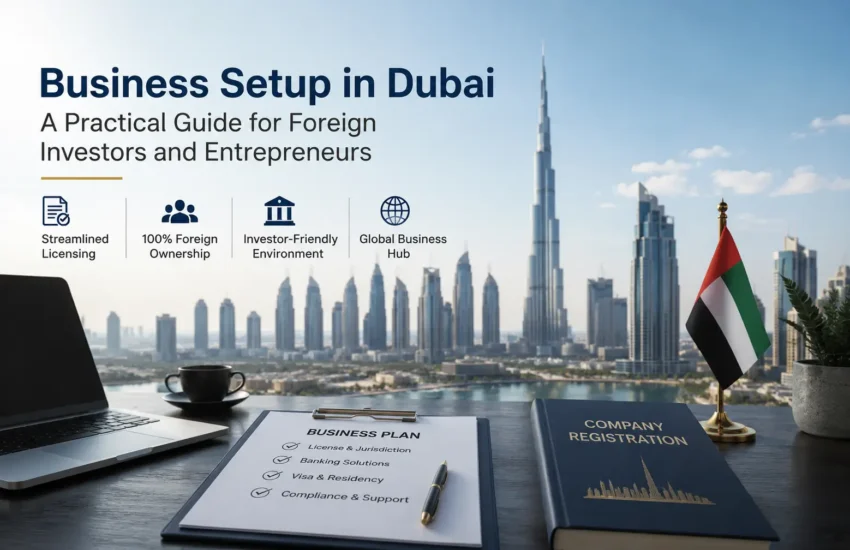
Business Setup in Dubai
Dubai has evolved far beyond being just a trading destination in the Middle East. Today, it has become one of the world’s most attractive business hubs for startups, SMEs, consultants, e-commerce brands, technology firms, and global investors looking for long-term expansion.
A major reason behind this growth is how aggressively the UAE government has modernized its business environment. Entrepreneurs can now access streamlined licensing systems, investor-friendly regulations, digital banking ecosystems, long-term residency options, and, in many sectors, 100% foreign ownership.
But despite the opportunities, business setup in Dubai is not as simple as many online advertisements make it sound.
The jurisdiction you choose, the business activity you register, the banking compatibility of your company structure, and even the wording used in your license application can directly impact how smoothly your company operates later.
This is where experienced setup guidance becomes important.
At Gulf Core Services, businesses receive strategic support beyond just documentation — including licensing guidance, PRO services, compliance assistance, and practical advice tailored to the UAE market.
Why Entrepreneurs Continue Choosing Dubai
Dubai’s appeal is not based on one single factor. It is a combination of taxation advantages, infrastructure, international connectivity, political stability, and business flexibility.
For many founders, Dubai works as a gateway market.
A company registered in Dubai can often serve clients across:
- GCC countries
- Europe
- Africa
- Asia
without requiring multiple regional headquarters.
Another major advantage is speed.
Compared to many Western countries where company registration, compliance approvals, and banking can take months, Dubai has significantly reduced setup timelines through digitized government systems.
Some entrepreneurs establish operational companies within days.
Key Reasons Businesses Prefer Dubai
1. Strategic Global Location
Dubai sits between Europe, Asia, and Africa, making it ideal for international trade, logistics, consulting, and remote service businesses.
For companies serving multiple time zones, this becomes operationally valuable.
2. Tax Efficiency
The UAE still remains one of the more tax-efficient jurisdictions globally despite the introduction of corporate tax.
Businesses benefit from:
- No personal income tax
- Competitive corporate taxation
- Strong double taxation agreements
- Investor-friendly financial systems
3. Business-Friendly Regulations
Recent reforms around foreign ownership, visas, and company incorporation have made Dubai significantly more accessible for overseas entrepreneurs.
4. Strong Digital Economy
Dubai has positioned itself aggressively in:
- Artificial Intelligence
- Fintech
- Web3
- E-commerce
- SaaS
- Smart infrastructure
This attracts both investors and skilled professionals globally.
5. Long-Term Residency Options
Programs like:
- Golden Visa
- Green Visa
- Investor Visas
have increased confidence among foreign entrepreneurs planning long-term expansion.
Mainland vs Free Zone vs Offshore: What Should You Choose?
One of the biggest mistakes entrepreneurs make during business setup in Dubai is selecting a jurisdiction purely based on low pricing.
The cheapest setup is not always the smartest setup.
Your ideal structure depends on:
- Business model
- Client geography
- Banking requirements
- Visa needs
- Operational flexibility
- Tax planning
Here’s a practical comparison.
| Feature | Mainland | Free Zone | Offshore |
| Foreign Ownership | Up to 100% for most activities | 100% | 100% |
| UAE Market Access | Full UAE access | Limited direct mainland trade | No local operations |
| Visa Eligibility | Yes | Yes | Usually No |
| Office Requirement | Often required | Flexible options available | Not required |
| Banking Ease | Strong | Moderate to strong | Can be challenging |
| Ideal For | Agencies, retail, consulting, trading | Startups, tech, e-commerce | Asset holding |
| Government Contracts | Eligible | Usually restricted | Not eligible |
| Physical Operations | Flexible | Zone dependent | Restricted |
When Mainland Makes More Sense
Mainland company formation is often better for businesses that:
- Want unrestricted UAE operations
- Plan to hire locally
- Need flexibility
- Work with government or local clients
Many business owners initially assume free zones are automatically better. That is not always true.
For example, service businesses targeting UAE clients often operate more smoothly under mainland structures.
When Free Zones Work Better
Free zones are commonly preferred for:
- Startups
- E-commerce businesses
- International consulting
- Tech companies
- Remote-first businesses
Some free zones also offer faster incorporation and lower operational costs.
However, not all free zones are equal.
Banking reputation, compliance scrutiny, and operational flexibility vary significantly.
This is where companies like Gulf Core Services help businesses avoid expensive structural mistakes early.
How Much Does It Cost to Start a Business in Dubai?
This is usually the first question entrepreneurs ask.
The honest answer is: it depends heavily on the setup structure.
A realistic business setup in Dubai involves several cost layers.
Typical Cost Components
License Fees
The business license itself is one of the primary expenses.
Costs vary depending on:
- Jurisdiction
- Activity type
- Number of activities
- Regulatory approvals
Visa Costs
Investor and employee visas involve:
- Entry permits
- Status change
- Emirates ID
- Medical tests
Office or Flexi-Desk Costs
Some jurisdictions require:
- Physical office space
- Shared desk facilities
- Co-working packages
Compliance & Documentation
Businesses may also need:
- Accounting support
- Corporate tax registration
- VAT registration
- Legal translation
- Notarization
Banking Assistance
Opening a UAE corporate bank account has become more compliance-driven in recent years.
Banks now evaluate:
- Business activity
- Client geography
- Source of funds
- Website presence
- Transaction profile
Improper setup structures can delay approvals significantly.
Hidden Costs Many Entrepreneurs Ignore
Some businesses underestimate:
- Renewal fees
- Immigration card renewals
- Dependent visa expenses
- Office upgrades
- Corporate tax compliance
- Banking minimum balance requirements
Cheap setup packages online often exclude several of these costs.
That is why experienced setup planning matters more than headline pricing.
Step-by-Step Process for Business Setup in Dubai
Although the UAE has simplified company formation considerably, there are still several operational steps involved.
Step 1: Select Your Business Activity
Your activity determines:
- Licensing authority
- Compliance obligations
- Banking compatibility
- Visa eligibility
This step is more strategic than many people realize.
Incorrect activity selection can later create banking or operational limitations.
Step 2: Choose the Right Jurisdiction
Mainland, free zone, or offshore.
The right answer depends on your actual business goals — not just initial setup costs.
Step 3: Reserve Your Trade Name
Trade names must comply with UAE naming regulations.
Certain words, abbreviations, and references require special approval.
Step 4: Obtain Initial Approvals
Government approvals may vary based on:
- Industry
- Ownership structure
- Nationality
- Regulated activities
Step 5: License Issuance
Once documentation is finalized, the business license gets issued.
At this stage, the company legally exists.
Step 6: Visa Processing
The immigration process includes:
- Entry permits
- Emirates ID registration
- Medical fitness tests
- Visa stamping
Step 7: Open a Corporate Bank Account
This is now one of the most sensitive stages.
Banks increasingly prefer businesses with:
- Professional websites
- Clear operational models
- Strong compliance documentation
- Realistic transaction explanations
Businesses that appear unclear or high-risk may face delays.
Common Mistakes Foreign Investors Make
A surprising number of entrepreneurs face avoidable issues because they rely entirely on low-cost setup advertisements.
Choosing a Jurisdiction Only Based on Price
A cheaper free zone may later create:
- Banking difficulties
- Operational restrictions
- Higher renewal costs
- Client limitations
Ignoring Banking Compatibility
Some business structures are easier for banks to onboard than others.
Banking strategy should be considered before incorporation — not after.
Selecting the Wrong Business Activity
Activity descriptions matter more than most founders realize.
Banks and regulators evaluate these carefully.
Underestimating Compliance
The UAE has strengthened compliance regulations significantly over recent years.
Businesses must now take:
- Corporate tax
- AML compliance
- ESR
- Accounting obligations
more seriously.
Not Planning for Scalability
Some businesses outgrow their initial setup quickly and require expensive restructuring later.
Strategic setup planning helps avoid that.
UAE Corporate Tax and Compliance Explained
The UAE remains tax-efficient, but compliance expectations are increasing.
Corporate Tax
The UAE introduced a 9% corporate tax on qualifying taxable profits above the applicable threshold.
For many international businesses, this is still relatively competitive globally.
VAT
VAT registration becomes mandatory once businesses cross the applicable revenue threshold.
Proper invoicing and accounting systems are important from the beginning.
Economic Substance Regulations (ESR)
Certain businesses must demonstrate actual operational substance inside the UAE.
Ultimate Beneficial Ownership (UBO)
Companies are required to disclose beneficial ownership information to maintain transparency.
Accounting & Record Keeping
Businesses are expected to maintain:
- Financial records
- Invoices
- Tax documentation
- Compliance filings
This is another reason entrepreneurs increasingly work with professional consultants rather than handling everything independently.
Best Industries for Business Setup in Dubai
Dubai continues attracting businesses across multiple high-growth sectors.
Artificial Intelligence
The UAE government is investing heavily in AI infrastructure and digital transformation initiatives.
AI consulting, automation, and SaaS businesses are expanding rapidly.
E-Commerce
Cross-border commerce continues growing across the GCC region.
Dubai’s logistics ecosystem supports:
- D2C brands
- Online retailers
- Amazon sellers
- Global fulfillment businesses
Fintech
Dubai has become increasingly attractive for:
- Payment companies
- Financial platforms
- Blockchain startups
especially through innovation-focused free zones.
Consulting & Professional Services
Management consulting, marketing agencies, HR consulting, and business advisory firms continue scaling strongly in Dubai.
Real Estate
The real estate sector remains highly active due to:
- International investor demand
- Residency-linked investments
- Luxury market expansion
Green Energy
Sustainability and renewable energy initiatives are receiving growing government attention.
Why Businesses Work with Setup Consultants
Technically, entrepreneurs can attempt parts of the process independently.
But many discover that UAE company formation involves practical nuances that are difficult to understand initially.
Faster Processing
Experienced consultants know:
- Which approvals matter
- Which authorities are stricter
- Which structures work best for banking
This reduces delays significantly.
Strategic Licensing Advice
The cheapest license is not always the best operational decision.
Professional guidance helps align:
- Licensing
- Banking
- Compliance
- Scalability
from the beginning.
PRO Services
Government documentation, immigration processing, and approvals can become time-consuming for foreign founders unfamiliar with local procedures.
Banking Guidance
This is now one of the biggest value areas.
Bank account approvals depend heavily on how the business is structured and presented.
Gulf Core Services supports entrepreneurs through these operational and compliance stages rather than simply issuing licenses.
Frequently Asked Questions About Business Setup in Dubai
Yes. Most business activities now allow 100% foreign ownership, especially under mainland and free zone structures.
It depends on your business model. Mainland offers broader UAE operational flexibility, while free zones may suit startups and international businesses better.
Many companies can be incorporated within days, although banking and visa processing may take longer depending on documentation.
Dubai does not impose personal income tax, but businesses may be subject to corporate tax and VAT depending on their activities and revenue.
Some processes may begin remotely, but banks often require in-person verification depending on the business profile.
Low-cost packages exist, but entrepreneurs should evaluate operational flexibility, renewals, and banking compatibility before choosing purely based on price.
The ideal free zone depends on your industry, operational goals, and banking needs.
Some jurisdictions allow flexi-desk or shared workspace solutions instead of traditional office leases.
Yes. Dubai offers strong logistics infrastructure, payment ecosystems, and international market access for e-commerce companies.
Consultants help avoid licensing mistakes, banking issues, compliance problems, and operational delays.
The Difference Between Fast Setup and Smart Setup
Dubai remains one of the few global business hubs where entrepreneurs can still move relatively fast, access international markets efficiently, and operate within a tax-efficient environment.
But successful business setup in Dubai is rarely just about obtaining a license.
The real advantage comes from choosing the right structure from the beginning — one that supports banking, compliance, scalability, and long-term operational flexibility.
That is why many international founders prefer working with experienced setup advisors like Gulf Core Services to navigate the process strategically rather than reactively.
